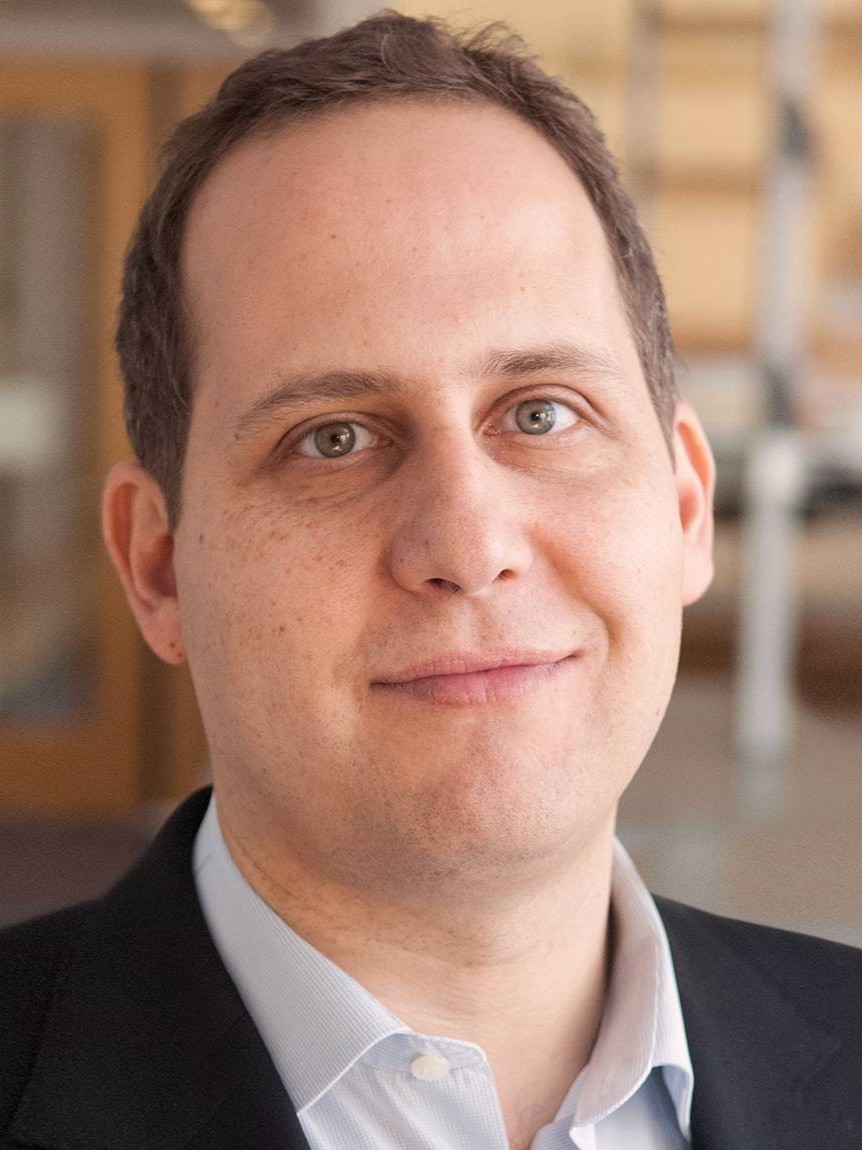
Recommended Readings: Alexander Soukas, M.D., Ph.D.; July 20, 2009

July 2nd, 2009

Monday Lecture Series

Genetics of lipid storage: lessons learned from C. elegans

Alexander Soukas, M.D., Ph.D.

Instructor, Dept. of Medicine, Massachusetts General Hospital, Harvard Medical School

Monday, July 20, 2009

4:00 p.m.-5:00 p.m. (Refreshments, 3:45 p.m.)

Second Floor, Welch Hall

Recommended Articles:

Soukas, A. A., E. A. Kane, C. E. Carr, J. A. Melo, and G. Ruvkun. 2009. Rictor/TORC2 regulates fat metabolism, feeding, growth, and life span in Caenorhabditis elegans. Genes and Development. 23(4):496-511.


Greer, E. R., C. L. Pérez, M. R. Van Gilst, B. H. Lee, and K. Ashrafi. 2008. Neural and molecular dissection of a C. elegans sensory circuit that regulates fat and feeding. Cell Metabolism. 8(2):118-131.


Srinivasan, S., L. Sadegh, I. C. Elle, A. G. L. Christensen, N. J. Faergeman, and K. Ashrafi. 2008. Serotonin regulates C. elegans fat and feeding through independent molecular mechanisms. Cell Metabolism. 7(6): 533-544.


Wang, M. C., E. J. O’Rourke, and G. Ruvkun. 2008. Fat metabolism links germline stem cells and longevity in C. elegans. Science. 322(5903):957-960.


Xie, T. 2008. Physiology: Burn fat, live longer. Science. 322(5903):865-866.


Zhang, J., C. Yang, C. Brey, M. Rodriguez, Y. Oksov, R. Gaugler, E. Dickstein, C. -H Huang, and S. Hashmi. 2009. Mutation in Caenorhabditis elegans krüppel-like factor, KLF-3 results in fat accumulation and alters fatty acid composition. Experimental Cell Research (article in Press).


Popularity: 2% [?]

AIDS: Clues To Virus-cancer Link Uncovered

June 18th, 2009

ScienceDaily (June 18, 2009) — In a series of recently-published articles, a research team from the University of North Carolina at Chapel Hill Lineberger Comprehensive Cancer Center has uncovered clues to the development of cancers in AIDS patients.  The first article published in April in PLoS Pathogens demonstrated that the Kaposi sarcoma associated herpesvirus (KSHV) is not only present in every tumor cell, but that the cells also transcribe microRNAs (miRNA) from the virus.   The second study was published June 4 in the journal Blood looked at the activity of several miRNAs known to suppress tumor activity.   Finding the mechanisms through which viruses take over cellular systems, resulting in cancer, is a promising strategy for cancer prevention and treatment, since it is much more feasible to block viral infection or develop specific inhibitors of the viral genes than try to inhibit all of the genetic changes within a cancer.

Popularity: 13% [?]

The Cycling Kinetics of Stem Cells: Review by Elaine Fuchs

June 1st, 2009

What are the factors that enter into stem cell longevity?  How do stems cells respond to injury?     Read Elaine Fuchs  Leading Edge Review, “The Tortoise and the Hare: slow-cycling cells in the stem cell race”  in the May 29 issue of Cell.  read accounts of some of the research that contributed to this state of knowledge.

Blanpain, C: amd Fuchs, E.  2009.   Epidermal homeostatis: a balancing act of stem cells in the skinNature Reviews.  Molecular Cell Biology. 10: 207-217.

Oxford, KW; and Scadden, DT.   2008.   Deconstructing stem cell self-renewal. Nature Reviews.  Genetics. 9: 115-128.

Lowry, WE: Blanpain, C: Nowak, JA; et al.  2005.  Defining the impact of beta-catenin/Tcf transactivation on epithelial stem cells.  Genes and Development.  19: 1596-1611.

Tumbar, T;  Guash, G; Greco, V; Blanspain, C; et al.   2004.  Defining the epithelian stem cell niche in skinScience. 303: 359-363.


Popularity: 29% [?]

Recommended Readings; Kevin Eggan, Ph.D., Wednesday, May 27, 2009

May 26th, 2009

Special Seminar Series

“Using Stem Cells and Reprogramming to Understand Neural Degeneration”

Kevin Eggan, Ph.D.,

Assistant professor, Department of Stem Cell and Regenerative Biology, and Principal Investigator, Harvard Stem Cell Institute, Harvard University; Assistant Investigator, Stowers Medical Institute

Wednesday, May 27, 2009

4:00 p.m.-5:00 p.m. (Refreshments, 3:45 p.m.)

Second Floor, Welch Hall

Recommended Articles:

Di Giorgio, F. P., G. L. Boulting, S. Bobrowicz, and K. C. Eggan. 2008. Human embryonic stem cell-derived motor neurons are sensitive to the toxic effect of glial cells carrying an ALS-causing mutation. Cell Stem Cell. 3(6):637-648.

Di Giorgio, F. P., M. A. Carrasco, M. C. Siao, T. Maniatis, and K. Eggan. 2007. Non-cell autonomous effect of glia on motor neurons in an embryonic stem cell-based ALS model. Nature Neuroscience. 10(5):608-614.

Dimos, J. T., K. T. Rodolfa, K. K. Niakan, L. M. Weisenthal, H. Mitsumoto, W. Chung, G. F. Croft, et al. 2008. Induced pluripotent stem cells generated from patients with ALS can be differentiated into motor neurons. Science. 321(5893):1218-1221.

Eggan, K. 2008. Using stem cells and reprogramming to understand disease. Regenerative Medicine. 3(6):799-801.

Egli, D., G. Birkhoff, and K. Eggan. 2008. Mediators of reprogramming: Transcription factors and transitions through mitosis. Nature Reviews Molecular Cell Biology. 9(7):505-516.

Okarma, T., and K. Eggan. 2008. A seismic shift for stem cell research. Science. 319(5863):560-561+563.

Popularity: 35% [?]

Recommended Readings; Gregory J. Hannon, Ph.D., Friday, May 29th

May 26th, 2009

Friday Lecture Series

Richard M. Furlaud Distinguished Lecture

“Conserved Roles of Small RNAs in Genome Defense”

Gregory J. Hannon, Ph.D., professor and chair, program in genetics and bioinformatics, Cold Spring Harbor Laboratory; investigator, Howard Hughes Medical Institute

May 29, 2009

3:45 p.m.-5:00 p.m. (Refreshments, 3:15 p.m., Abby Lounge)

Caspary Auditorium

Recommended Articles:

Malone, C. D., J. Brennecke, M. Dus, A. Stark, W. R. McCombie, R. Sachidanandam, and G. J. Hannon. 2009. Specialized piRNA pathways act in germline and somatic tissues of the drosophila ovary. Cell. 137:522–535.


Czech, B., C. D. Malone, R. Zhou, A. Stark, C. Schlingeheyde, M. Dus, N. Perrimon, et al. 2008. An endogenous small interfering RNA pathway in Drosophila. Nature. 453(7196):798-802.


Tam, O. H., A. A. Aravin, P. Stein, A. Girard, E. P. Murchison, S. Cheloufi, E. Hodges, et al. 2008. Pseudogene-derived small interfering RNAs regulate gene expression in mouse oocytes. Nature. 453(7194):534-538.


Zhou, R., I. Hotta, A. M. Denli, P. Hong, N. Perrimon, and G. J. Hannon. 2008. Comparative analysis of argonaute-dependent small RNA pathways in Drosophila. Molecular Cell. 32(4):592-599.


Aravin, A. A., G. J. Hannon, and J. Brennecke. 2007. The piwi-piRNA pathway provides an adaptive defense in the transposon arms race. Science. 318(5851): 761-764.


Brennecke, J., C. D. Malone, A. A. Aravin, R. Sachidanandam, A. Stark, and G. J. Hannon. 2008. An epigenetic role for maternally inherited piRNAs in transposon silencing. Science. 322(5906): 1387-1392.


Girard, A., and G. J. Hannon. 2008. Conserved themes in small-RNA-mediated transposon control. Trends in Cell Biology. 18(3)136-148.


Reviews


Kim, V. N., J. Han, and M. C. Siomi. 2009. Biogenesis of small RNAs in animals. Nature Reviews Molecular Cell Biology. 10(2):126-139.

Siomi, H., and M. C. Siomi. 2009. On the road to reading the RNA-interference code. Nature. 457(7228):396-404.

Malone, C. D., and G. J. Hannon. 2009. Small RNAs as guardians of the genome. Cell. 136(4):656-668.

Popularity: 35% [?]

Cancers Outwit Immune System by Silencing Signaling Mechanism

May 20th, 2009

Scientists at Stanford University’s School of Medicine have shown that muting a key voice in the conversation between human immune cells as they coordinate an effort to fight off infection is an early step in the progression of human cancers.    The study, published May 18 in the Proceedings of the National Academy of Sciences, shows that the interferon pathway may harbor a general immune defect in many kinds of cancer. That may help explain the immune dysfunctions seen in numerous cancer patients, and why cancer immunotherapies are often ineffective.

Popularity: 39% [?]

Recommended Readings: Paul Nurse, PhD May 18, 2009

May 15th, 2009

Monday Lecture Series

“Controlling the Eukaryotic Cell Cycle”

Paul Nurse, PhD

President, The Rockefeller University

May 18, 2009

4:00 p.m.-5:00 p.m. (Refreshments, 3:45 p.m.)  

Second Floor, Welch Hall


Review Articles:

Nelson, B; Kurischeko, C; Horecka, J. et al.  2003.  RAM: A conserved signaling network that regulates Ace2p transcriptional activity and polarized morphogenesis.  Molecular Biology of the Cell.  14(9):3782-3803

Hasan S;  Hassa, PO;  Imhof, R. et al. 2001.  Transcription coactivator p300 binds PCNA and may have a role in DNA repair synthesis.  Nature. 410(6826):387-391  


Recommended Articles:

Bottcher, RT; Wiesner, S; Braun, A. et al.  2009.   Profilin 1 is required for abscission during late cytokinesis of chondrocytes.  EMBO Journal. 28(8):1157-1169

Neumann, FR; Nurse, P.  2007.  Nuclear size control in fission yeast.  Journal of Cell Biology. 179(4):593-600

 Drewes, G; Nurse, P.  2003.  The protein kinase kin1, the fission yeast orthologue of mammalian MARK/PAR-1, localises to new cell ends after mitosis and is important to bipolar growth.  FEBS Letters. 554(1-2):45-49

Arellano, M; Niccoli, T; Nurse, P.  2002.  Tea3p is a cell end marker activating polarized growth in Schizosaccharomyces pombe. Current Biology. 12(9):751-756

Hirata, D; Kishimoto, N; Suda, M. et al.  2002.  Fission yeast Mor2/Cps12, a protein similar to Drosophila Furry, is essential for cell morphogenesis and its mutation induces Wee1-dependent G92) delay.   EMBO Journal.   21(18):4863-4874 

Bahler, J; Nurse, P.  2001.  Fission yeast Pom1p kinase activity is cell cycle regulated and essential for cellular symmetry during growth and division. EMBO Journal. 20(5):1064-1073 

Browning, H.; Hayles, J; Mata, J. et al.   2000.  Tea2p is a kinesin-like protein required to generate polarized growth in fission yeast.  Journal of Cell Biology.  151(1):15-27 

Sawin, KE; Hajibacheri, M.A.Nassar; Nurse, P.  1999.  Mis-specification of cortical identity in a fission yeast PAK mutant.  Current  Biology. 9(22):1335-1338

Chang, F; Drubin, D; Nurse, P.  1997.  cdc12p, a protein require for cytokinesis in fission yeast, is a component of  the cell divisions ring and interacts with profiling. Journal of Cell Biology.  137(1):169-182


Popularity: 42% [?]

Study Reveals Effects of Cocaine on Genome Structure and Function

May 15th, 2009

Repeated use of addictive drugs such as cocaine causes long-lasting changes in parts of the brain involved in motivation and reward, among others, yet the precise mechanisms by which these changes are maintained are poorly understood. A new study by scientists supported by the National Institute on Drug Abuse (NIDA), published May 14, 2009 in the journal Neuron, sheds light on this process by providing fundamental new insights into the effects of cocaine on the structure and function of the genome, the complete set of DNA instructions needed to make an organism.

Investigators led by Eric Nestler, M.D., Ph.D., of Mount Sinai School of Medicine in New York, used a powerful new molecular analysis technique, known as ChIP-chip, to observe changes in gene activity in the brains of laboratory mice injected with cocaine.   The study demonstrated, for the first time, that a family of genes called the sirtuins are activated in the nucleus accumbens by chronic cocaine administration and contribute to addiction-related behaviors in animal models.

These findings raise the possibility of using sirtuin inhibitors as treatment agents for cocaine addiction. Further analysis of other genes activated and inhibited by cocaine may help to identify additional therapeutic targets for addiction treatment.

Popularity: 42% [?]

Recommended Readings: Gerald Crabtree, M.D.; June 5, 2009

May 14th, 2009

Friday Lecture Series

“Understanding the Words of Chromatin Remodeling”

Gerald Crabtree, M.D.

Stanford University

June 5, 2009

3:45 p.m.-5:00 p.m. (Refreshments, 3:15 p.m., Abby Lounge)

Caspary Auditorium

Recommended Articles:

Wu, J. I., J. Lessard, and G. R. Crabtree. 2009. Understanding the words of chromatin regulation. Cell. 136(2):200-206.


Lessard, J., J. I. Wu, J. A. Ranish, M. Wan, M. M. Winslow, B. T. Staahl, H. Wu, R. Aebersold, I. A. Graef, and G. R. Crabtree. 2007. An essential switch in subunit composition of a chromatin remodeling complex during neural development. Neuron. 55(2):201-215.


Chi, T. H., M. Wan, P. P. Lee, K. Akashi, D. Metzger, P. Chambon, C. B. Wilson, and G. R. Crabtree. 2003. Sequential roles of brg, the ATPase subunit of BAF chromatin remodeling complexes, in thymocyte development. Immunity. 19(2):169-182.


Rando, O. J., T. H. Chi, and G. R. Crabtree. 2003. Second messenger control of chromatin remodeling. Nature structural biology. 10(2):81-83.


Wu, J. I., J. Lessard, I. A. Olave, Z. Qiu, A. Ghosh, I. A. Graef, and G. R. Crabtree. 2007. Regulation of dendritic development by neuron-specific chromatin remodeling complexes. Neuron. 56(1):94-108.


Olave, I. A., Reck-Peterson, S. L., and Crabtree, G. R. 2002. Nuclear actin and actin-related proteins in chromatin remodeling. Annual Review of Biochemistry. 71:755-781.

Popularity: 43% [?]

The Element That Controls Pluripotency in Stem Cells

May 7th, 2009

ScienceDaily (May 7, 2009) — Scientists at UC Santa Barbara have made a significant discovery in understanding the way human embryonic stem cells function.   They explain nature’s way of controlling whether these cells will renew, or will transform to become part of an ear, a liver, or any other part of the human body.   The research team includes James Thomson, who provided an important proof to the research effort.  The new research shows that a microRNA –– a single-stranded RNA whose function is to decrease gene expression –– lowers the activity of three key ingredients in the recipe for embryonic stem cells.  This microRNA is known as miR-145.   The study is reported in the May 1 issue of the journal Cell.

Popularity: 47% [?]